



Today we’d like to introduce you to Jenn Williams.
Hi Jenn, thanks for joining us today. We’d love for you to start by introducing yourself.
I began my professional journey in kidney health in May 2011 at Satellite Healthcare, where I first saw how much clarity and communication were missing for patients trying to understand their own kidney health. That early experience stayed with me as I moved into payer environments, including Blue Cross Blue Shield of Texas, where I gained deeper exposure to government‑managed care and the operational realities that shape patient outcomes. It was the first time I saw, from the inside, how governance, policy, and payer logic directly affected people with kidney conditions — often in ways the public never sees.
My decade at Humana shaped the next phase of my identity. I worked in cross‑functional management of contract‑related work, which taught me how large organizations translate regulatory requirements into operational processes. It also showed me how easily critical information can get lost between teams, departments, and care transitions. That experience became the backbone of how I think today: structured, governance‑aligned, and focused on clarity.
As the industry shifted, I transitioned into independent consulting and virtual work. It wasn’t a dramatic reinvention — it was a response to how healthcare was changing and how much of the work could be done more effectively outside traditional structures. That shift gave me the space to build Kidney Contenders® with a different kind of voice.
Kidney Contenders® began as a personal observation: people weren’t being told what kidney health actually requires. Not in clinics, not in payer materials, and not in community spaces. The information existed, but the communication didn’t. I didn’t want to create another educational platform. I wanted to create something that made people rethink what they accept and don’t accept about their own health — without feeling like they were being educated at all.
Today, my work is driven by a simple idea: if people can understand their health differently, they can act differently. Kidney Contenders® is my way of bringing governance clarity, payer logic, and real‑world kidney literacy into a space where people can finally see what has always been there.
Would you say it’s been a smooth road, and if not what are some of the biggest challenges you’ve faced along the way?
It hasn’t been a smooth road, but the challenges were never about motivation — they were about navigating systems that weren’t built for clarity. Working across dialysis organizations, payers, and large managed‑care environments showed me how fragmented kidney‑related information really is. Patients often receive incomplete guidance, providers operate under different assumptions, and payers interpret regulations in ways that don’t always translate cleanly to the people they serve.
Inside payer operations, I saw how governance, policy, and contract logic could unintentionally create gaps in care transitions. Those gaps weren’t caused by any one person or team — they were structural. And when you work in cross‑functional environments, you learn quickly that clarity doesn’t travel on its own. You have to build it, reinforce it, and protect it.
The hardest part wasn’t the work itself. It was realizing how much important information never reaches the community, even when everyone involved is trying to do the right thing. That disconnect is what ultimately shaped my voice and my approach. Kidney Contenders® grew out of those struggles — not as a reaction, but as a way to bring structure, literacy, and governance clarity to a space that needs it.
Thanks for sharing that. So, maybe next you can tell us a bit more about your work?
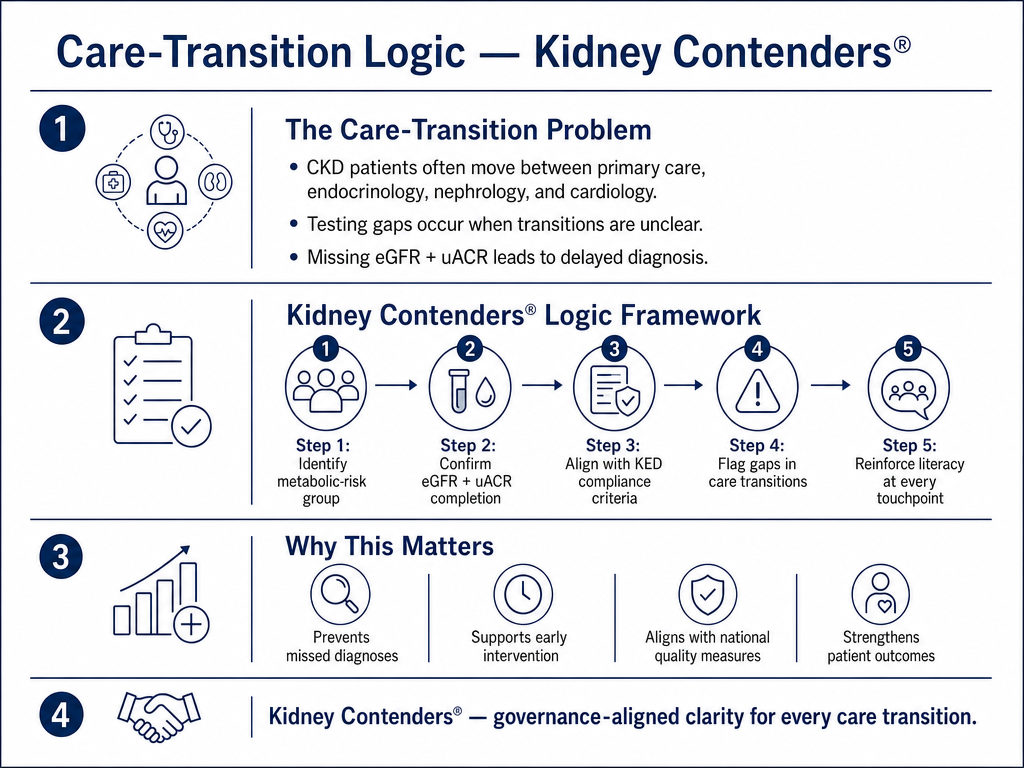
I work in healthcare operations and governance, specializing in how clinical policy, payer logic, and regulatory requirements translate into real‑world processes. Over the years, I’ve worked across dialysis organizations, government‑managed care, and large payer environments, which has given me a clear view of how kidney‑related information moves — and how often it fails to reach the people who need it most.
Professionally, I’m known for cross‑functional management of contract‑related work, regulatory clarity, and my ability to simplify complex requirements so teams can execute them without confusion. My work has always centered on structure: making sure information is accurate, consistent, and aligned with the policies that govern care.
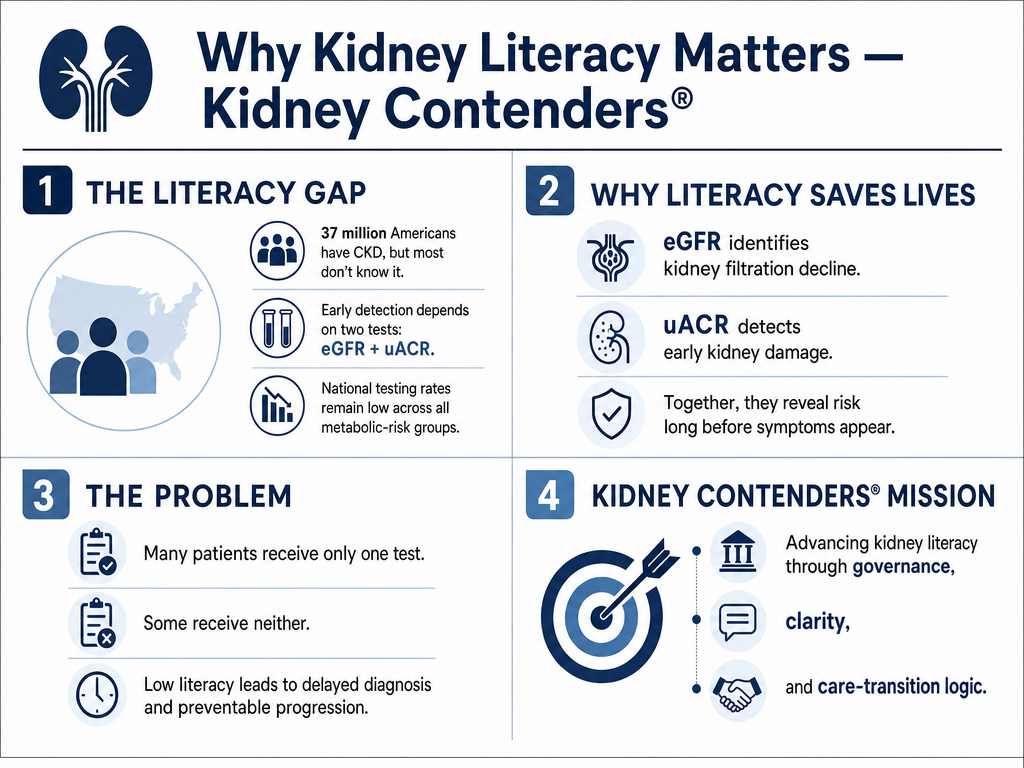
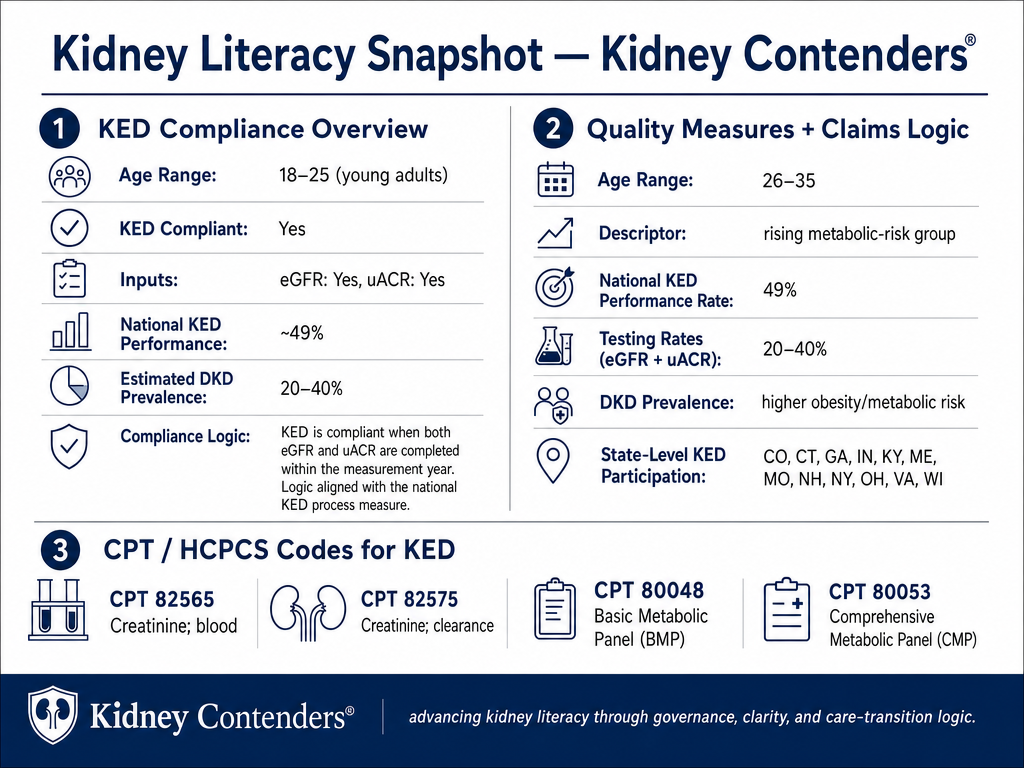
What I’m most proud of is Kidney Contenders®. It’s not a business in the traditional sense — it’s a governance‑aligned literacy project. I built it to address a gap I saw repeatedly: patients weren’t being told what kidney health actually requires, and the community wasn’t being given clear, accessible explanations of the tests, logic, and policies that shape their care. Kidney Contenders® allows me to bring payer‑side clarity into a public space without making people feel like they’re being lectured or educated.
What sets me apart is my perspective. I don’t approach kidney health from inspiration or advocacy. I approach it from governance, operations, and policy — the areas that quietly determine whether people receive the right information at the right time. My work is about making those systems understandable, so individuals can redefine what they accept and don’t accept about their own health.
Can you talk to us a bit about happiness and what makes you happy?
What makes me happy is clarity — when information finally makes sense to someone in a way it didn’t before. I’ve spent years watching how kidney‑related information moves through dialysis organizations, payers, and managed‑care systems, and I’ve seen how often people are left with gaps they don’t even know exist. When someone tells me they understand their health differently because of something I explained, that’s the moment that feels meaningful.
I’m also happy when structure works the way it’s supposed to — when a process is clean, when a policy is interpreted correctly, or when a care‑transition issue is resolved because the right information reached the right person. Those moments remind me why governance matters and why clarity isn’t just an operational preference; it’s a form of care.
On a personal level, I’m happiest when I’m creating something that helps people rethink what they accept and don’t accept about their own health. If I can make someone feel informed without feeling like they’re being educated, that’s the kind of work that feels worthwhile to me.
Contact Info:
- Website: https://kidneycontenders.com/
- Instagram: https://www.instagram.com/jentan7477/
- Facebook: https://www.facebook.com/kidneycontenders
- LinkedIn: https://www.linkedin.com/company/kidney-contenders%C2%AE
- Twitter: https://x.com/KidneyContender
- Youtube: https://www.youtube.com/@KidneyContenders