


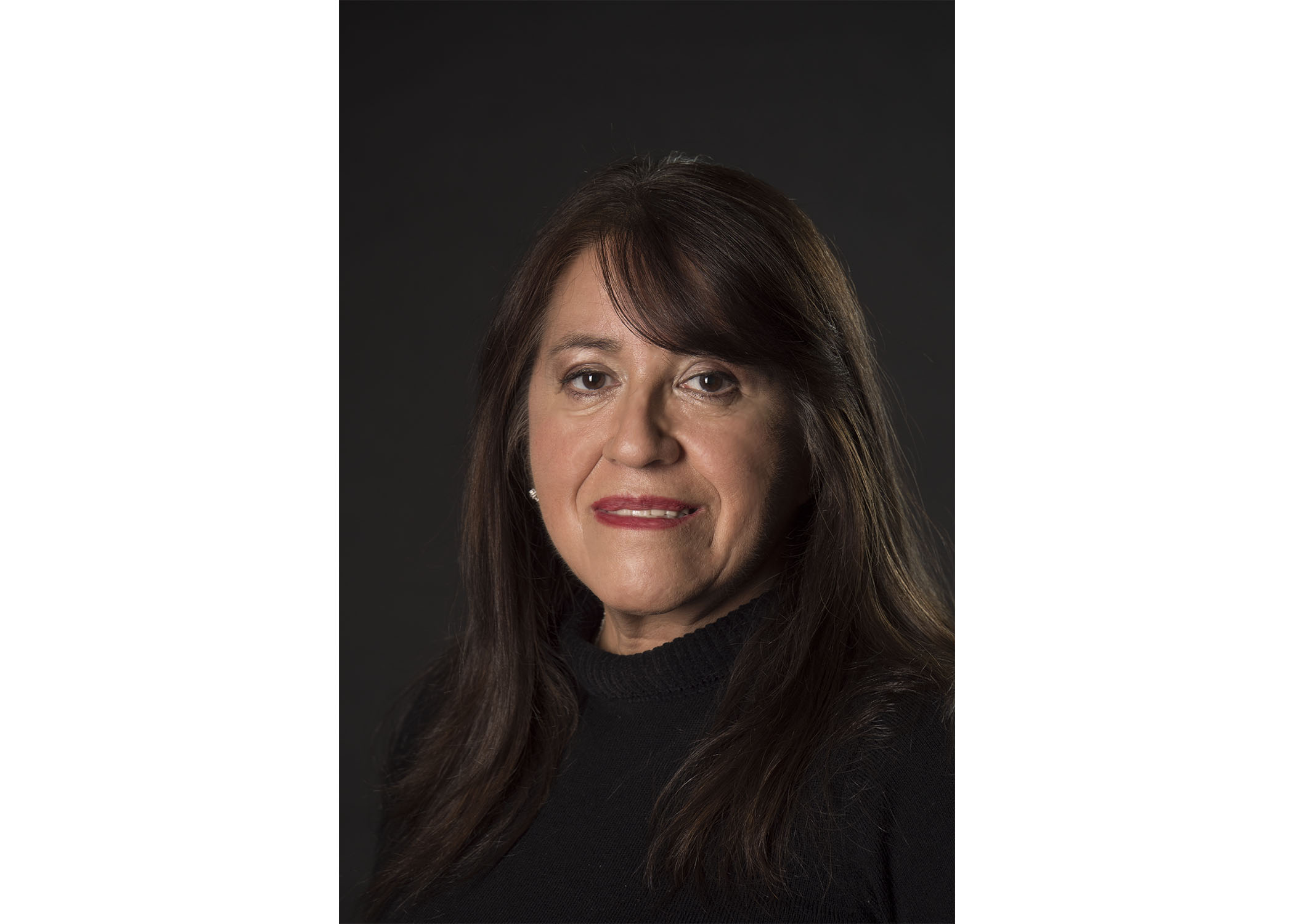
Today we’d like to introduce you to Norma Del Toro.
Hi Norma, can you start by introducing yourself? We’d love to learn more about how you got to where you are today?
My journey with art began long before I knew I would one day dedicate myself to the theater. My grandfather had a clothing stall at a market in Mexico City, and I would accompany him there during my school breaks. While he tended to his stall, I would play with cardboard boxes—drawing windows and doors on them—and using soda bottle caps and popsicle sticks as furniture. I would draw little figures on paper and cut them out, using them to invent characters and stories. Without realizing it, I was building my very first stage sets. I wrote my first poems at the age of ten, and at night, to help myself fall asleep, I would tell myself stories in which I was the protagonist.
I took my first theater classes at fourteen, but it wasn’t until high school that I joined a theater group. Later, however, university studies left me with little spare time; then I got married, and theater was set aside for years. Although I stopped acting, I never stopped imagining—I would occasionally write poems and stories. I would invent tales for my children, and on their birthdays, I would put on puppet shows for them.
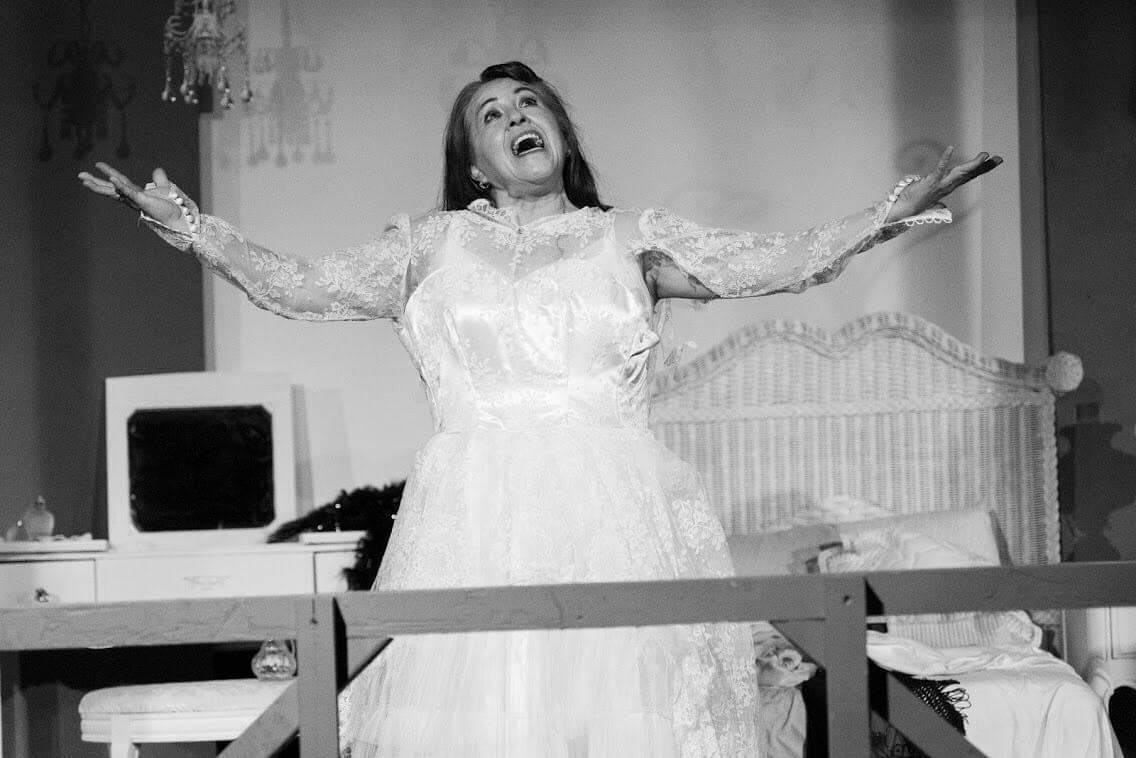
After moving to Austin, I saw an advertisement one day for a production of The Vagina Monologues. I initially intended to buy tickets to see the play, but I discovered that they were actually looking for actresses. I auditioned and ended up being part of the cast for five years—the last two as director. From there, I went on to participate in twenty productions with various Spanish-language theater groups in Austin.
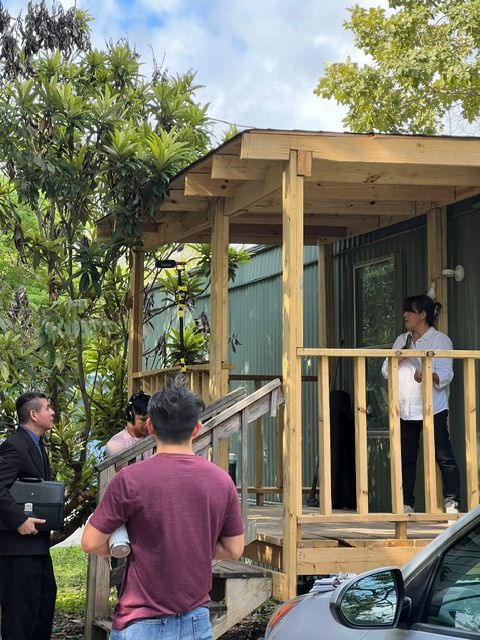
During the pandemic, when stages were forced to close, my need to create led me to take online courses in audiovisual production, screenwriting, and playwriting with Xavier Villanova. That was when—armed with just a camera and a light—Borrego Red was born, a project I co-founded with my dear friend, actor, director, and screenwriter Daniel Almanza. We felt a strong need to tell Latinx stories that humanize us—portraying us as individuals with dreams, emotions, contradictions, and an inner life, rather than solely as workers.
We began by making six short films, and in 2023, we produced Los Negros Pájaros del Adiós (The Black Birds of Goodbye). I also took part in the Austin Latinx New Play Festival, organized by Teatro Vivo, where two of my scripts were selected for staged readings. I write short stories that I share at Café con Letras (Coffee with Letters)—a free literary and musical showcase—where I perform or read them. For the three editions of Cabarex with Proyecto Teatro, I wrote all of my own material; that experience earned my collaborator Guicha Gutierrez and me a nomination for Best Comedic Duo. More recently, we staged Fracturados (Fractured)—a play I wrote—which received five nominations at the B. Iden Payne Awards.
I suppose the girl who used to play with cardboard boxes eventually found larger stages on which to continue telling stories.
I’m sure it wasn’t obstacle-free, but would you say the journey has been fairly smooth so far?
No, it has definitely not been a smooth journey. In my high school theater group, the teacher cast me in pantomime roles because I have a have a speech impediment preventing me from rolling my “r” (back then, there was no therapy to correct it), so I accepted it. Also, in recent years, my facial nerve has become damaged, causing my right eye to twitch involuntarily from time to time. But my inner strength and love for what I do have compelled me to keep moving forward, focusing on the portrayal of my characters—and here I am.
It has been a difficult path, one of knocking on doors and, on many occasions, having to create our own spaces. At the beginning—as is the case for many independent artists—I received no payment for my work. In truth, I have always done theater for the love of the art. My paid work is cleaning houses; with that income, combined with my husband’s, we cover our material needs. I have learned to live with these two realities: one allows me to survive financially, while the other nourishes my spirit. Both are necessary for my survival.
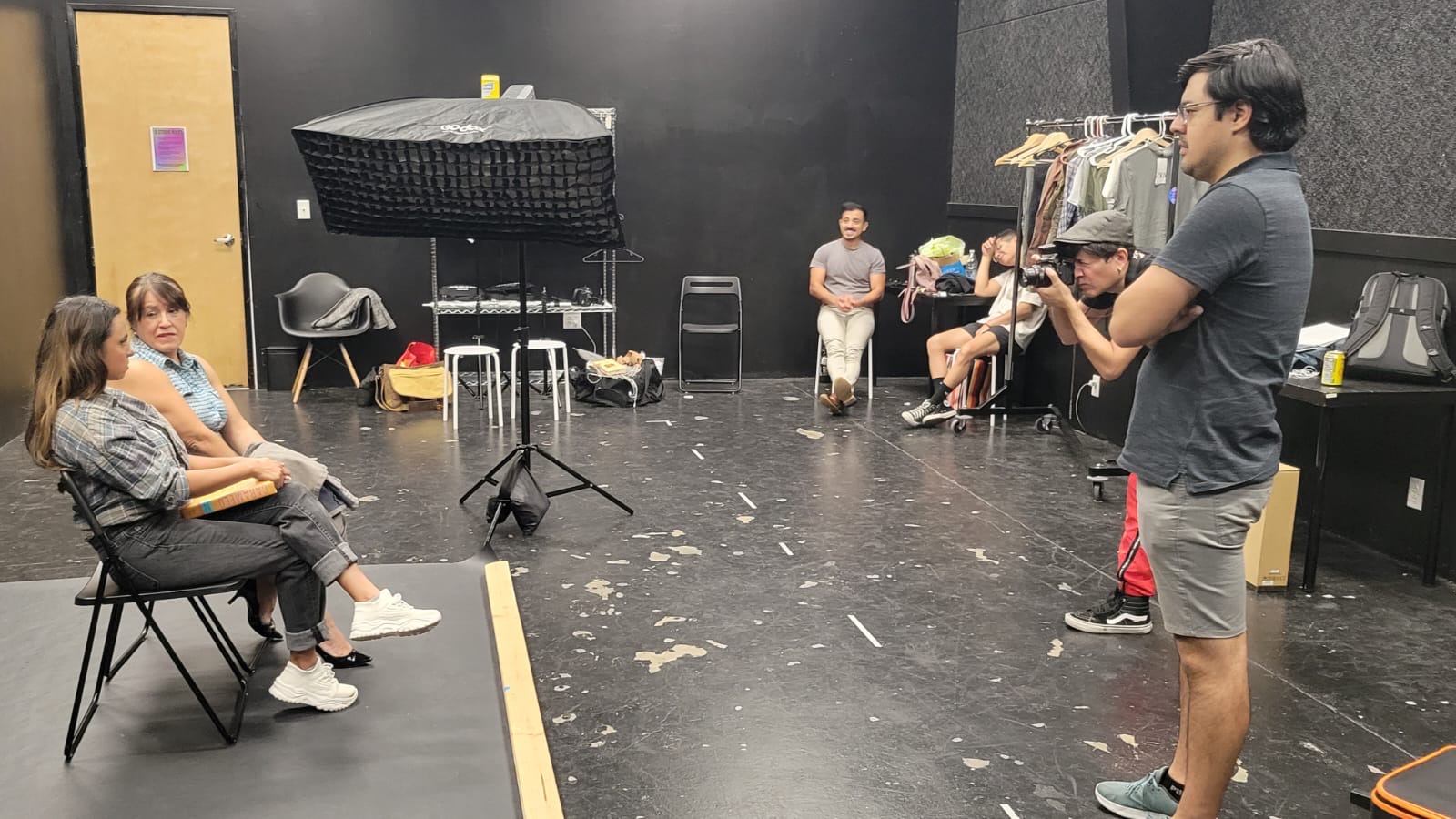
With Borrego Red, Daniel Almanza and I have had to learn how to do everything: seeking resources, securing sponsors, hauling equipment, painting sets, producing, acting—all while paying for things out of our own pockets. For our short films, we’ve benefited from the generosity of artists who contributed their time and talent for free. In theater, however, we’ve made it a priority to pay the artists who work with us—even if that often means we end up with nothing for ourselves. That said, the recognition and the results fill us with pride. Fracturados is a prime example of what it means to produce theater in Spanish. We brought it to life with a $5,000 grant from Nexus, support from a low-cost theater program, and $1,300 in sponsorships.
What does that actually look like? It means scouring thrift stores for furniture, gathering donations, painting sets, stretching every dollar, finding rehearsal spaces (which are incredibly expensive), and promoting shows to help cover costs through ticket sales. Behind what the audience sees during a performance lie countless hours of hard work and sacrifice that often go unrecognized. I believe one of the greatest challenges is the lack of support for Spanish-language theater in Austin—whether in terms of venues, resources, or broader recognition. Another challenge is engaging Spanish-speaking audiences who may have never attended a theater production before. But we are persistent; through Borrego Red, we will continue to tell stories—because they deserve to be heard, and because our Hispanic community has so much to contribute to the cultural life of this city.
As you know, we’re big fans of you and your work. For our readers who might not be as familiar what can you tell them about what you do?
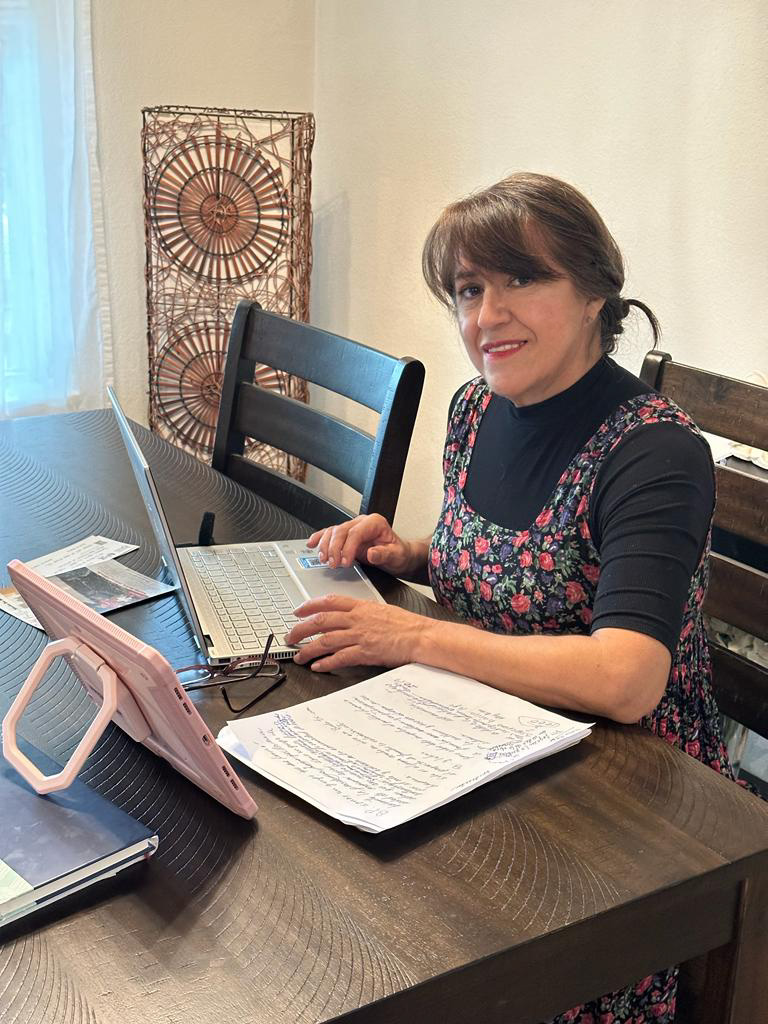
Norma Del Toro is a bilingual play write, screenwriter, actor, director, and producer living in Buda, Texas.
Do you have recommendations for books, apps, blogs, etc?
Los de Abajo by Juan Rulfo, poetry by Federico Garcia Lorca, and Cien Años de Soledad and Amor en Los Tiempos de Colera by Gabriel Garcia Marquez, El Metamorfosis by Franz Kafka, La Peste y Albert Camus, El Hombre de La Mancha por Cervantes, and Hamlet by William Shakespeare.
Too many to mention here.
Pricing:
- Free admission
- Affordable tickets
- $0
- Pay What You Wish
- <$25
Contact Info:
- Instagram: https://www.instagram.com/normasanchezvarela
- Facebook: https://www.facebook.com/borregored
- Youtube: https://youtube.com/@borregored?si=kq314rSOXP_sCuVp