


Today we’d like to introduce you to Zackary McCaskill.
Zackary, we appreciate you taking the time to share your story with us today. Where does your story begin?
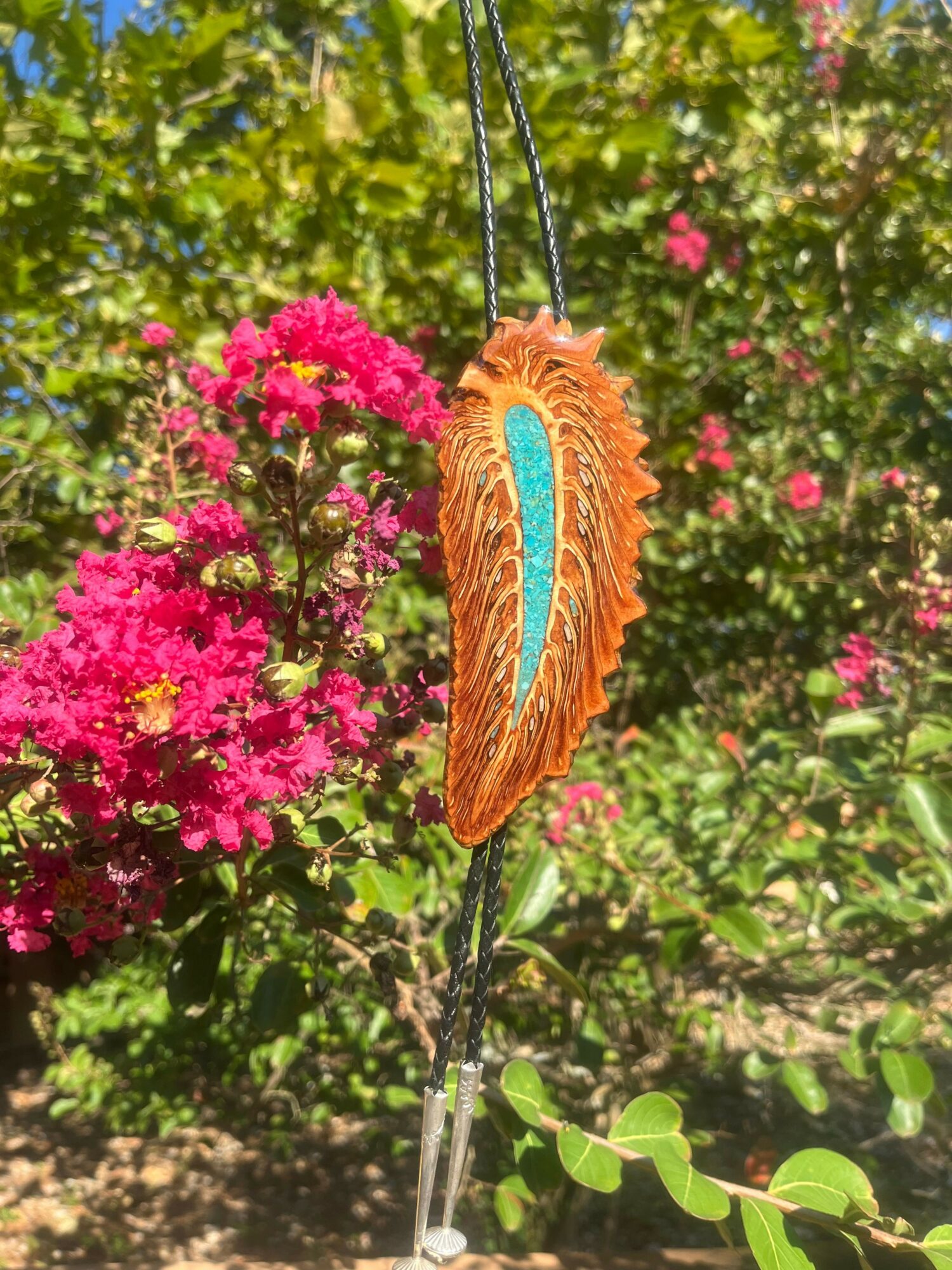
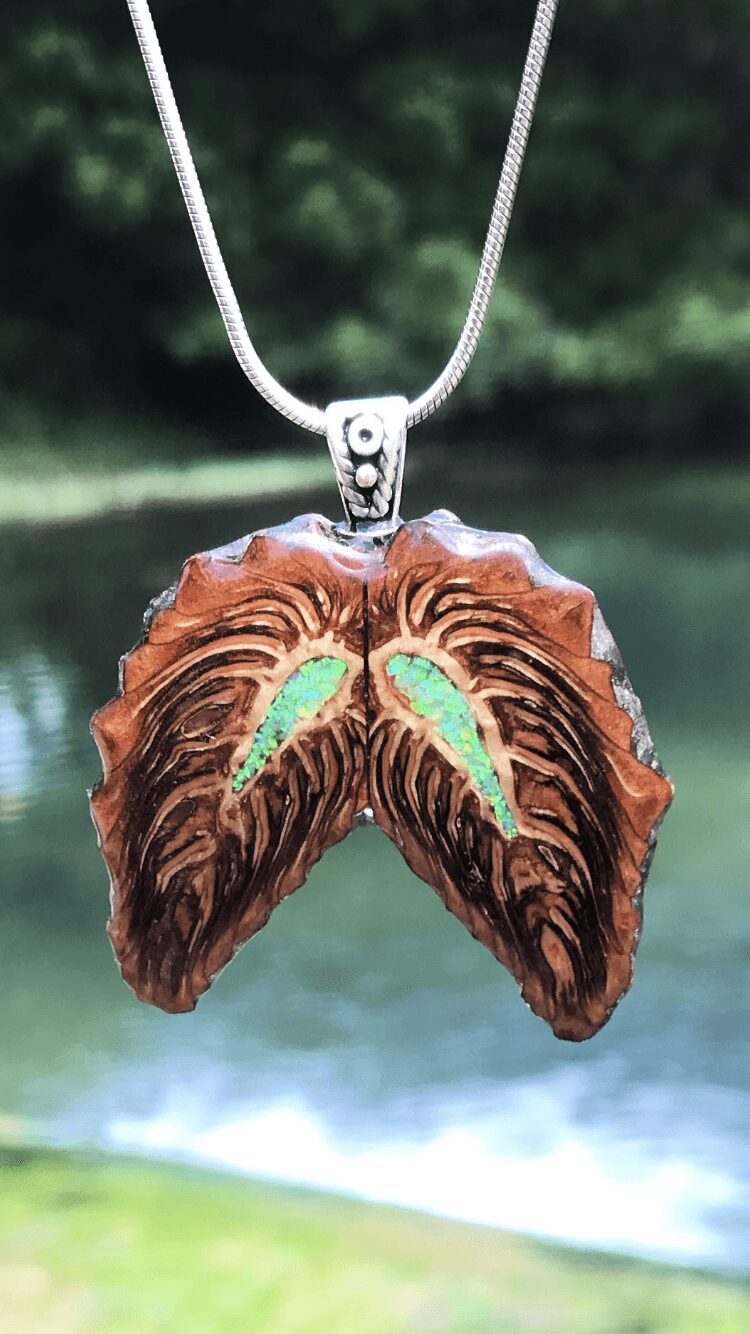
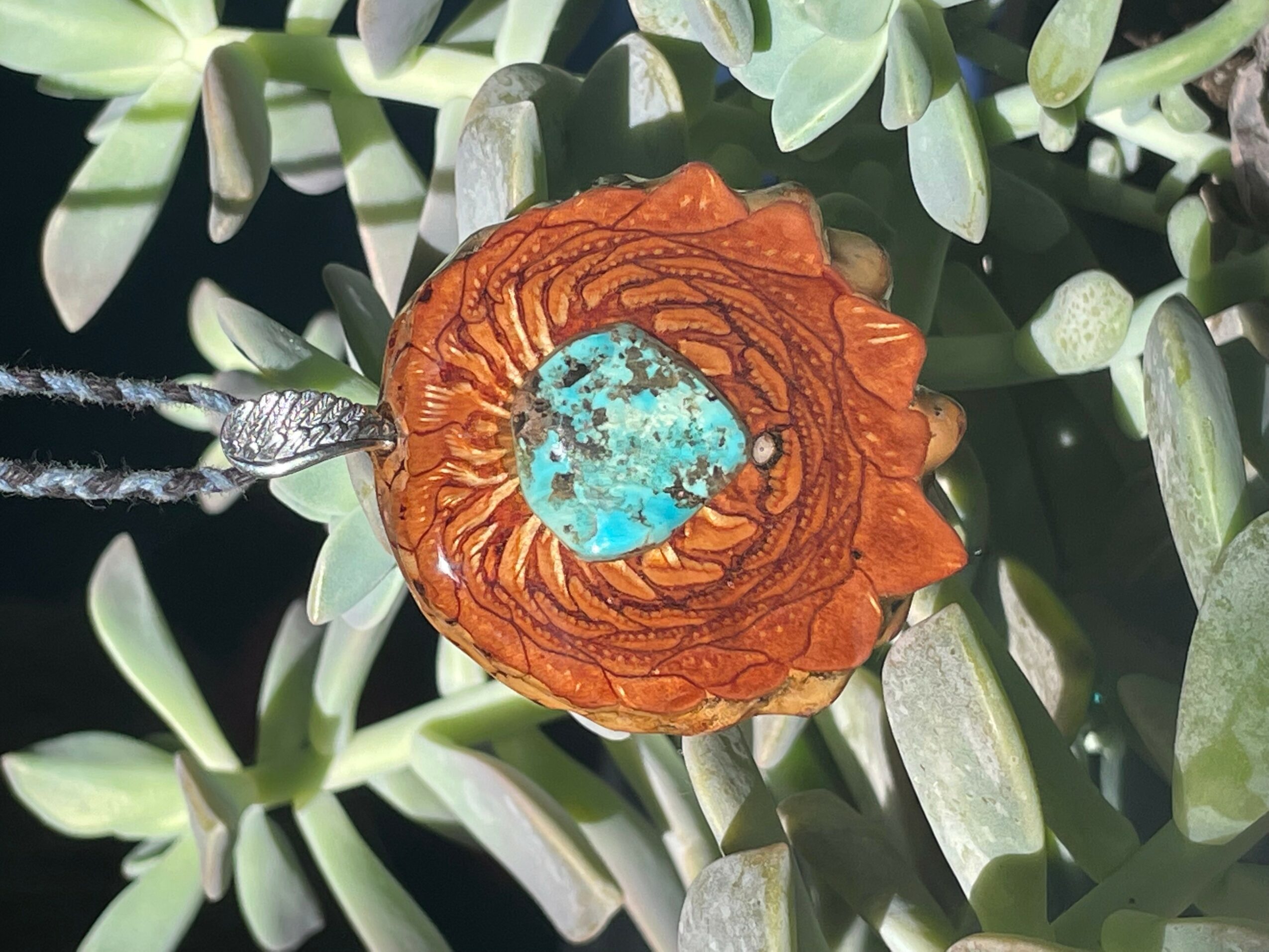
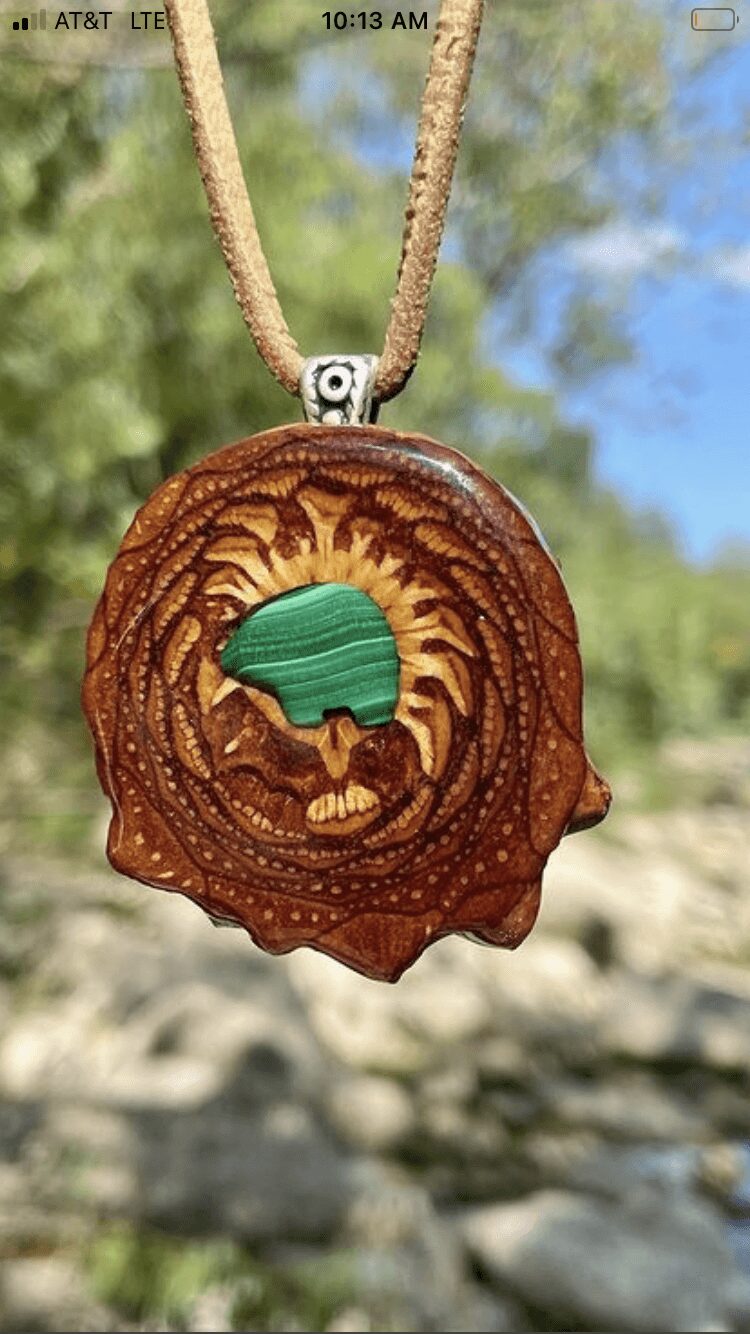
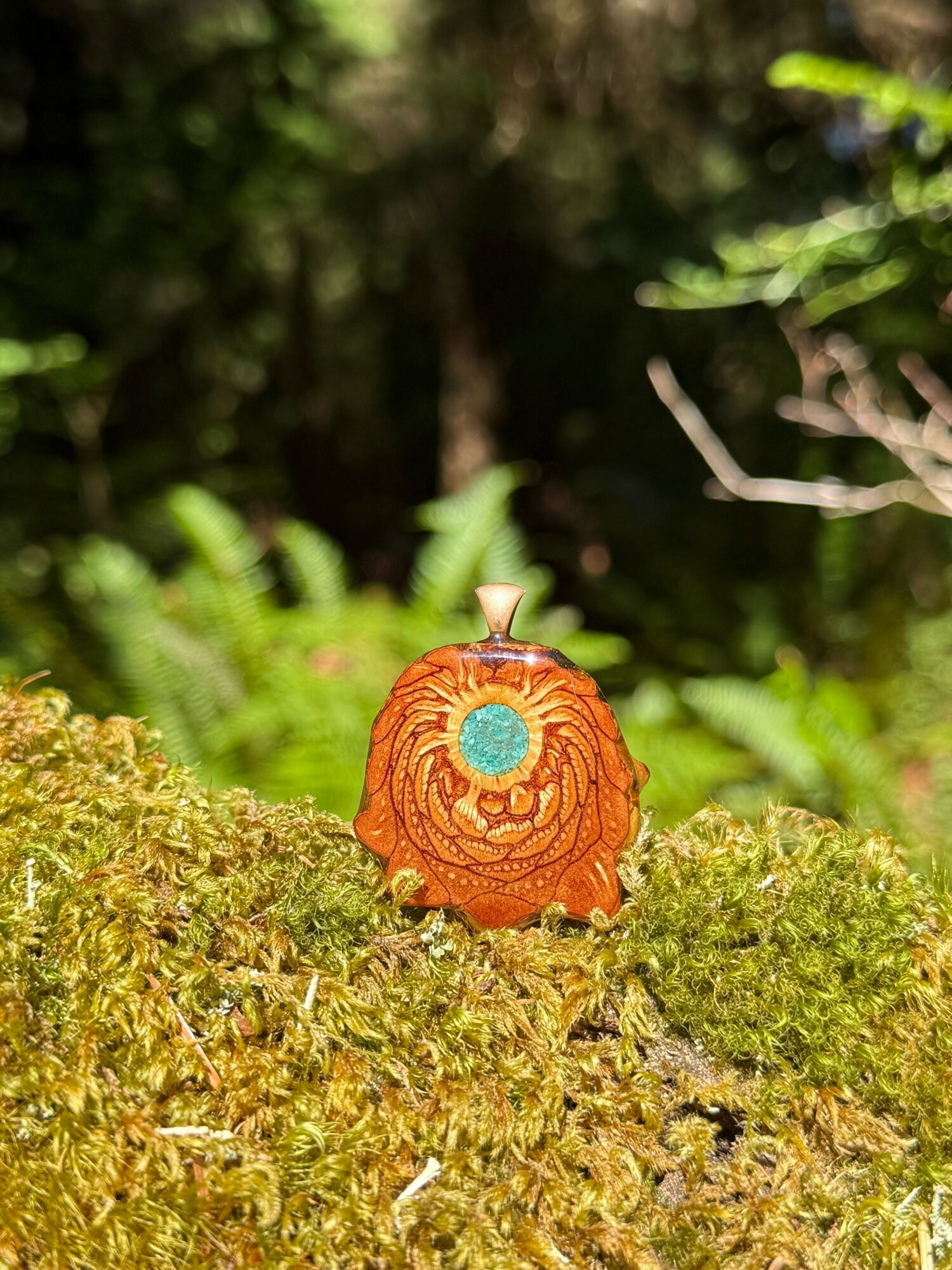
My journey with Two Feathers Pinecones started in the summer of 2016–2017 with a simple moment of curiosity. I saw someone wearing a necklace that caught my attention, and when I asked about it, they told me it was made from a pinecone by a company in California. I remember saying, “If that’s what it is, I can do that,” since I had years of woodworking experience from working alongside my grandfather.
They told me it wasn’t that simple—that it was a large company and not something I could just replicate. That challenge stuck with me.
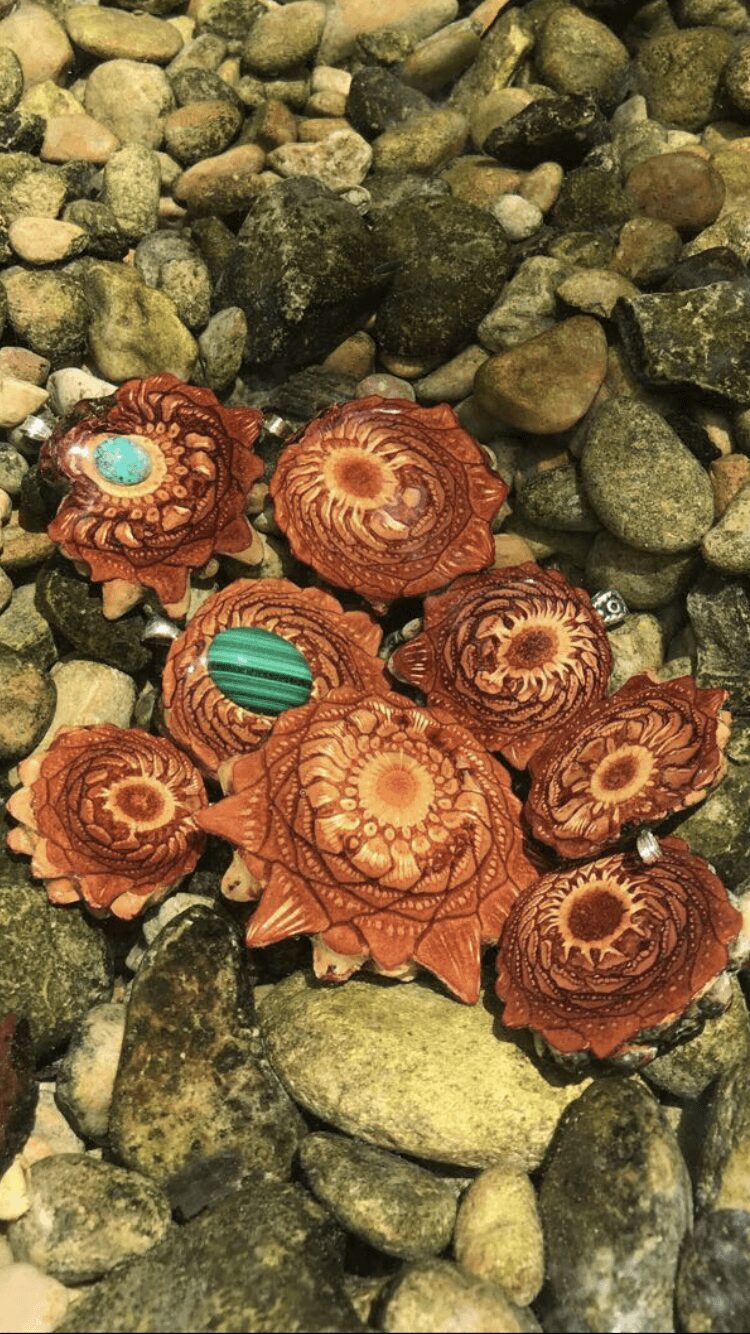
I went home that same day, climbed a pine tree behind my grandfather’s woodshop, and collected a few tightly closed pinecones. I cut them into cross-sections using a bandsaw and immediately noticed the intricate, natural patterns inside. While similar, they weren’t quite the same as the necklace I had seen. That’s when I realized the specific type of pinecone mattered.
I began researching and eventually discovered the material used: the knobcone pine. Over the next couple of years, I sourced these cones from regions along the Oregon–California border where they naturally grow. Knobcones are incredibly unique—they are one of the densest pinecones in the world, sealed tightly with resin and designed by nature to only open under extreme heat, around 360°F, typically during a forest fire. It means the tree only reproduces after destruction, which I’ve always seen as a powerful symbol of renewal.
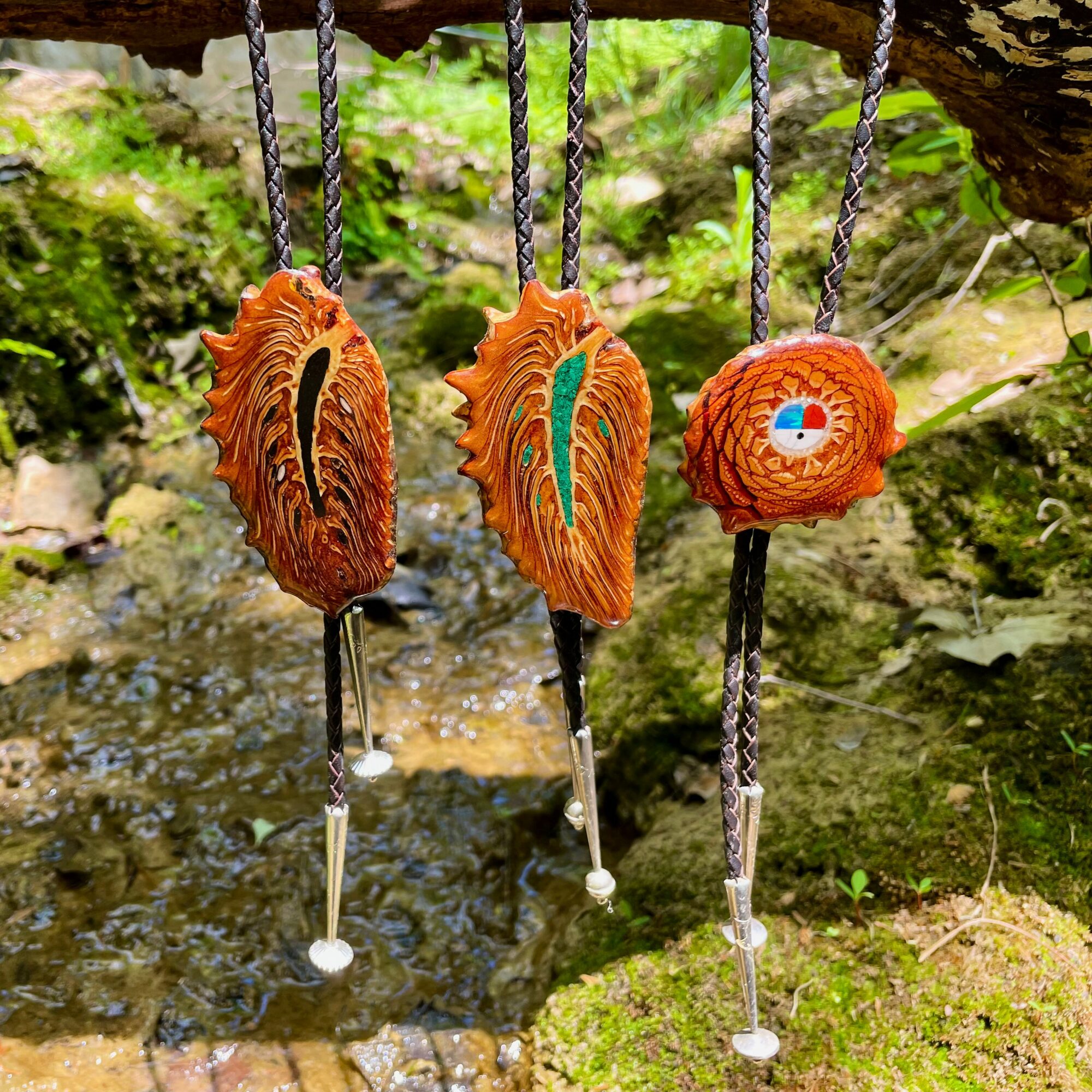
Over time, I refined my process and developed my own style, turning these pinecones into one-of-a-kind pieces of wearable art. Through this journey, I’ve been fortunate to build relationships with other artists and have my work carried in stores such as Connoisseur on the Square in San Marcos, the Choctaw Welcome Center in Durant, Oklahoma, and the Egmont Native American Heritage Center in British Columbia, among others.
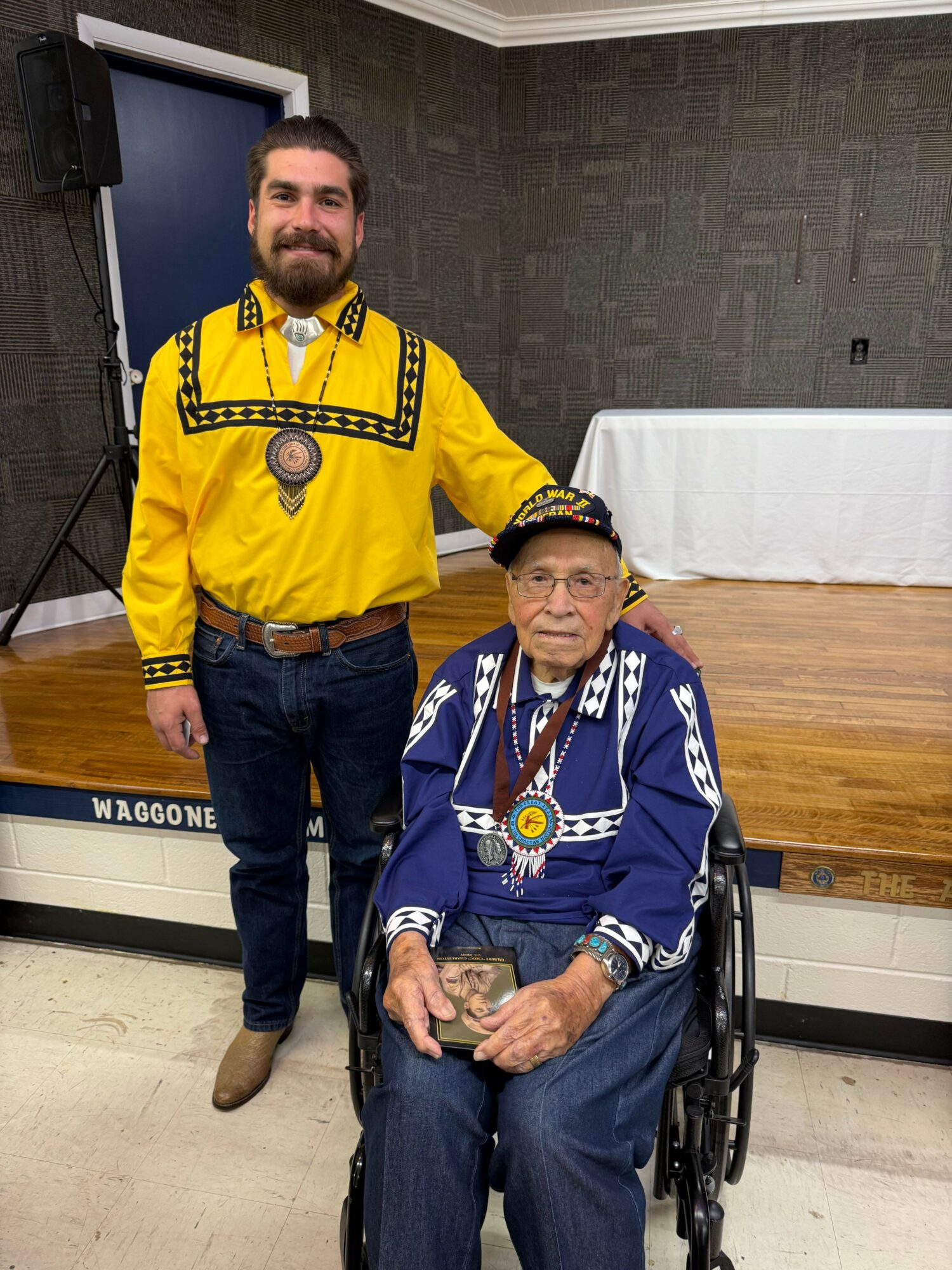
As a card-carrying Choctaw Indian and a registered artist with the Choctaw Nation of Oklahoma, each piece I create is certified as Native-made. Every item is completely unique—no two will ever be identical—because each comes from a natural source, much like a fingerprint.
Today, my work continues to grow, and my pieces are available through select retailers as well as online at twofeatherspinecones.com. What started as a challenge became a passion—and ultimately, a way to share both craftsmanship and meaning through art.
I’m sure it wasn’t obstacle-free, but would you say the journey has been fairly smooth so far?
It definitely hasn’t been a smooth road. What started as a simple idea quickly turned into years of trial and error.
One of the biggest challenges was sourcing the right material. The knobcone pine doesn’t grow just anywhere—it’s limited to very specific regions along the Oregon–California border. In the beginning, I didn’t have direct access, so I had to spend years tracking down reliable sources, dealing with inconsistent supply, and sometimes waiting long periods just to get usable material.
Another major challenge was refining the process itself. These pinecones are incredibly dense and full of resin, which makes them difficult to cut, shape, and finish properly. I went through a lot of failed attempts—pieces cracking, finishes not coming out right, or designs that just didn’t meet my standard. It took time to figure out how to consistently turn something raw and unpredictable into a polished, wearable piece of art.
There were also the typical challenges of building a business from scratch—getting people to take it seriously, finding places willing to carry the work, and learning how to present and price something that’s completely unique. Early on, a lot of people didn’t understand the value or the story behind it, so I had to learn how to communicate that clearly.
On top of that, balancing the creative side with the business side has always been a challenge. You’re not just making art—you’re also handling sourcing, production, relationships, and growth.
But looking back, those struggles are what shaped the quality of the work and the brand. Nothing about it was handed to me—it was all built through persistence, and that’s what makes it meaningful.
Thanks – so what else should our readers know about your work and what you’re currently focused on?
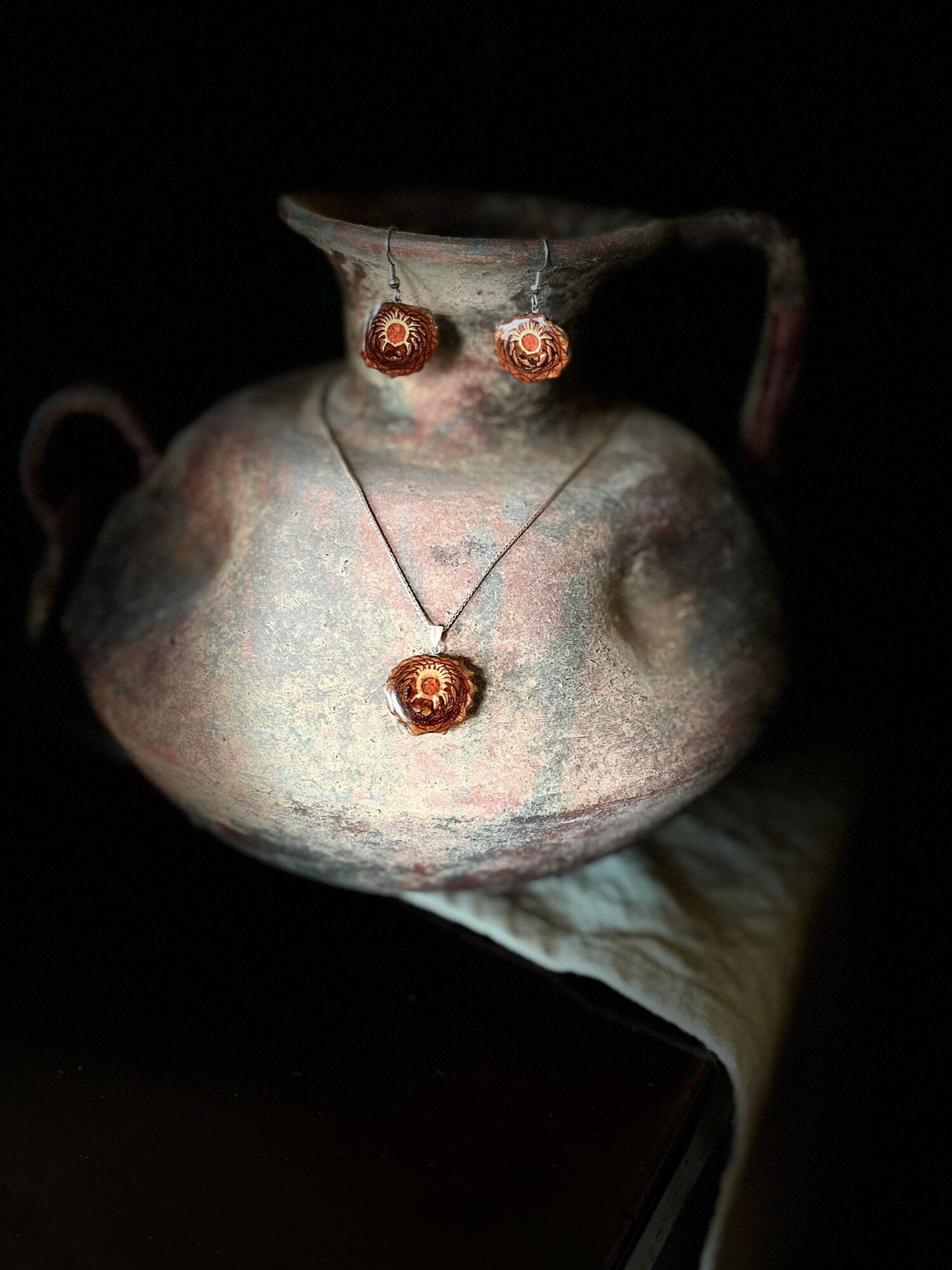
My work is centered around creating one-of-a-kind, handcrafted pieces that blend natural materials with cultural meaning. Through Two Feathers Pinecones, I specialize in turning knobcone pinecones into wearable art—each piece is completely unique, shaped by nature and refined through my process. What I’m most known for is the intricate internal pattern of the pinecone itself, which creates a design that can’t be replicated. No two pieces will ever be the same.
What truly sets my work apart is my Native American heritage, which I carry into everything I create. As a registered artist with the Choctaw Nation of Oklahoma, each piece is not just jewelry—it’s a certified Native-made artifact that represents both craftsmanship and identity. There’s a deeper story behind it, rooted in nature, resilience, and tradition, and that meaning is something people connect with.
In addition to my art, I also build high-end custom furniture. I work with a variety of exotic hardwoods, but Texas mesquite is my favorite. I create pieces such as dining tables, coffee tables, bedroom sets, and entertainment centers—furniture that’s designed to last a lifetime and stand out as a centerpiece in any space. That background in woodworking is actually what made Two Feathers possible in the first place.
On the business side, I’m also the owner of Bed Bright Liners LLC, where we specialize in spray-in bedliners and restoring truck beds for car dealerships. We’ve grown into a corporate vendor for some of the largest automotive groups in the country, including Berkshire Hathaway Automotive, Group 1 Automotive, and Kahlig Auto Group. That business reflects a different side of what I do—efficiency, systems, and scaling—but it’s built on the same foundation of craftsmanship and attention to detail.
What I’m most proud of is building everything from the ground up. Whether it’s a piece of jewelry, a custom table, or a growing service business, it all started with an idea and a willingness to figure things out through experience. I take a lot of pride in the fact that my work—across all areas—is original, intentional, and built to a high standard.
Can you tell us more about what you were like growing up?
I grew up in the small but well-known town of Wimberley, where life as a kid felt wide open and unrestricted. Most of my time was spent outdoors—exploring the woods, swimming in the rivers, and just living freely. Places like Blanco River and Cypress Creek were a part of daily life. The water was always clear, and there were no fences, fees, or rules. Spots like Jacob’s Well and Blue Hole Regional Park felt like they belonged to all of us. As a kid, it really felt like nothing was off-limits and nothing was impossible.
That all changed after a devastating flood hit the town. It took lives, destroyed parts of the community, and wiped out cypress trees that had stood for hundreds of years. After that, everything became more restricted—fences went up, parking lots were built, and access that once felt like a birthright suddenly came with rules and fees. It was a defining moment that changed how I saw the world.
Personality-wise, I was very adventurous and always looking to have a good time—sometimes a little too much. I loved making people laugh, playing sports, and just being active. School wasn’t my main focus, and I spent more time in the principal’s office than I probably should have. I played football, baseball, soccer, and basketball, but I was also always thinking creatively and entrepreneurially, even at a young age.
At Bowen Elementary School, I actually started a small “business” where I would buy items from the school store, wait for them to sell out, and then resell them to other students at a markup. It was simple, but it taught me early on how supply and demand worked—and it funded whatever I wanted at the time.
As I got older, I started getting into more trouble, and eventually I was placed into an alternative education program where I was separated from other students and closely monitored. It was a difficult time, and socially it changed things for me. But that period also led to one of the most important turning points in my life.
I went to live with my grandparents, and that’s where everything started to shift. My grandfather, a highly respected master woodworker, took me under his wing and began teaching me the craft. That’s where I developed my skills, my discipline, and my appreciation for creating something meaningful with my hands.
I ended up graduating high school a year early and was even offered a golf scholarship to Southern Methodist University, as I had been playing competitively through the junior PGA. But instead of going that route, I chose to stay and continue learning from my grandfather and focus on building something of my own.
Looking back, I’d describe myself as a kid who was a bit of a troublemaker, but also driven, competitive, and entrepreneurial. I had a lot of energy and creativity—I just needed the right direction. Once I found that through woodworking and mentorship, everything started to come together.
Pricing:
- Mini: $60-$250
- Small: $60-$300
- Medium: $60-$400
- Large: $60-$500
- Bolo ties, angel wings and earrings: $140-$600
Contact Info:
- Website: https://Twofeatherspinecones.com