


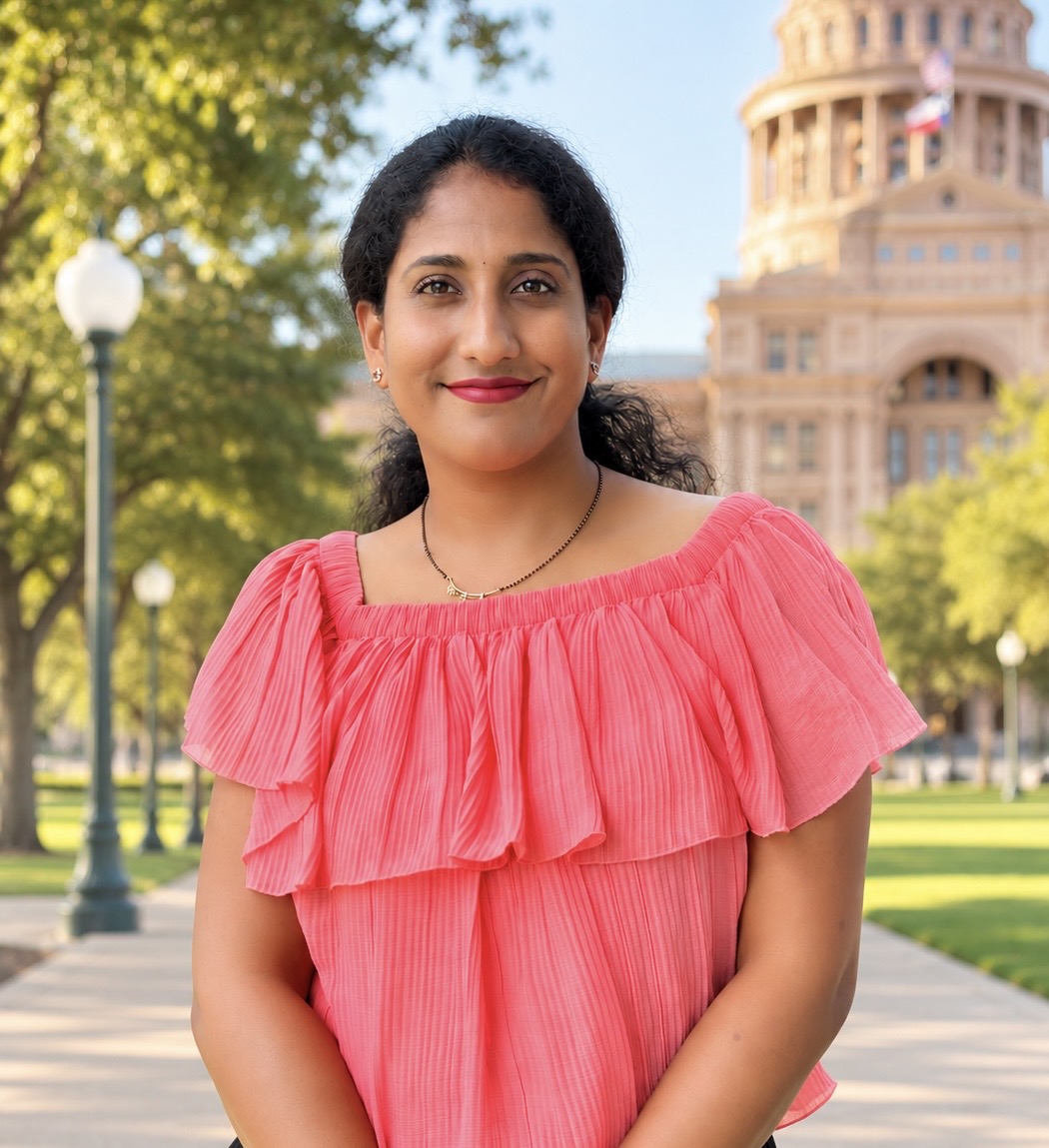
Today we’d like to introduce you to Meghana Vantipalli.
Hi Meghana, please kick things off for us with an introduction to yourself and your story.
My story doesn’t follow a straight line, and I think that’s what makes it worth telling.
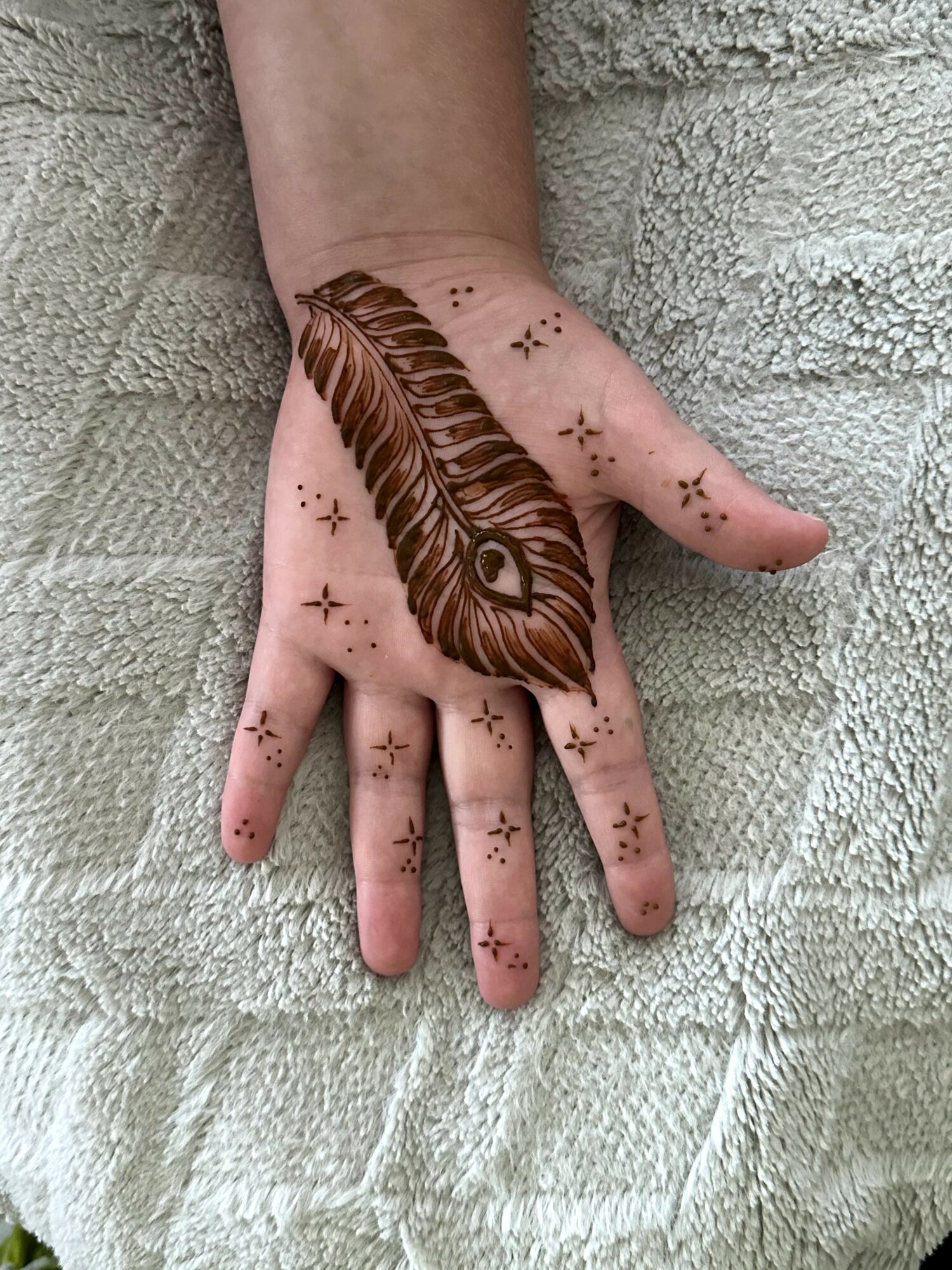
I grew up in a small town called Bodhan in Telangana, India. It was a tight-knit community where every festival smelled like marigolds and fresh henna, where women gathered on wedding mornings to have intricate patterns drawn on their hands and feet, and where art was not something you studied, it was just part of how you lived. As far back as I can remember, I have always been creating something. I trained in Bharatanatyam, the classical Indian dance form that teaches that every gesture carries meaning and that beauty is built through discipline. I painted landscapes, portraits, scenes from everyday life and found that a blank canvas had the same pull on me as a dance floor. And from a very young age, I was fascinated by Mehendi: the way a single flowing line could become a peacock, a lotus, a bride’s entire story told in copper-brown ink on skin. These weren’t hobbies. They were how I understood the world.
I completed my schooling in Bodhan, then earned my Bachelor of Engineering in Computer Science from Vasavi College of Engineering in Hyderabad. After graduation, I worked in my father’s business for four years, years that taught me things no classroom could, about responsibility, about showing up, about what it means to build something with your own hands. Then I got married, and life took me across the world to the United States.
That was over a decade ago. When you immigrate, your entire identity gets reshuffled. I focused on what most immigrant families focus on: building a home, raising children, and figuring out how to belong. My two kids were born and grew up here, going to school here, and became Texans completely and without hesitation. I am proud of them. And slowly, I started asking myself: what about me? So I went back to school. I enrolled at Texas State University to pursue a Master’s degree in Data Analytics and Information Systems — a field that felt like a bridge between my engineering background and the data-driven world I was living in. But as I navigated a shifting job market, I found myself coming back to something that had never really left me.
Henna.
I had always done it — for friends, for family, for celebrations. But I started to think about it differently. Austin is one of the most creatively alive cities in the country, and people here love art in every form — murals, tattoos, body paint, handcrafted everything. Yet most Americans outside the South Asian community don’t fully know the story of Henna. They see it as decoration. They don’t know it’s a very old tradition with roots in ancient Egypt, India, and North Africa. In Ayurvedic tradition, henna applied to the palms and soles is believed to cool the body from within, which is part of why Indian brides, dressed in heavy silk and jewelry in the summer heat, have always had their hands and feet done first. It’s not just a ritual. It’s care.
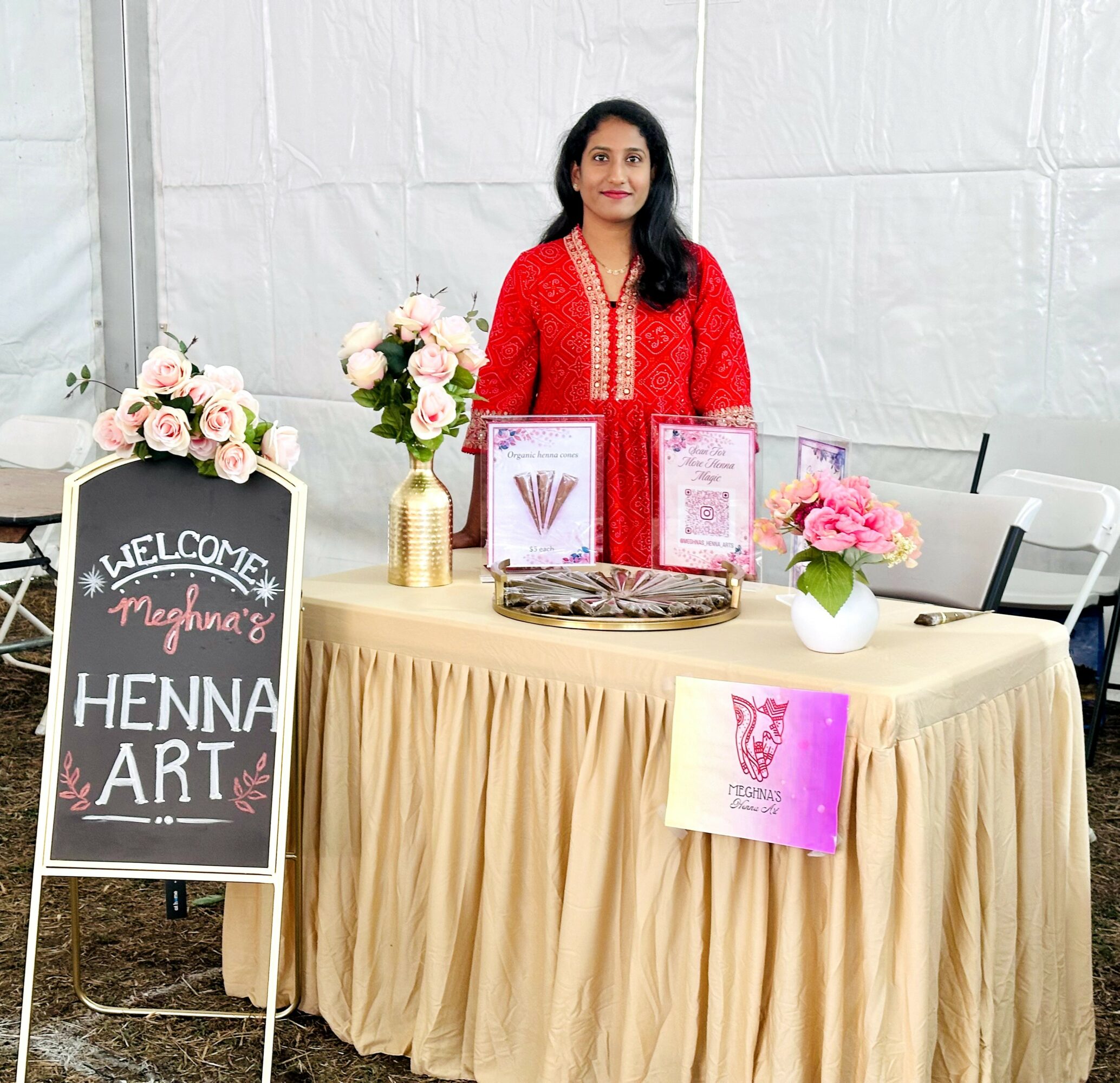
I thought: Austin needs to know this story. And I can be the one to tell it. So I launched Meghana’s Henna Art. And I’ll be honest — the beginning was humbling. The first weeks were quiet. No orders, no inquiries, just a website and a lot of hope. I could have stepped back, but instead I stepped forward. I started showing up — literally. I reached out to local community events, set up stalls at South Asian cultural gatherings, Indian festivals, and neighborhood markets around Austin. I brought my kit, my designs, and my story. I let people watch the art come alive on someone’s hand in real time. That was the turning point. People gathered. They asked questions. They sat down. And one appointment became five, became twenty, became a steady flow of clients who came back and brought their friends.
Today, I work with South Asian families celebrating birthdays, weddings, Eid, Diwali, and Navratri. And I work with local Austinites drawn to the idea of a natural, beautifully intricate alternative to permanent ink — people who want something meaningful on their skin that also fades gracefully. Every appointment is a conversation. I explain the tradition, the meaning behind the motifs, and the history. My background in painting shapes every design I draw — the same eye for composition, the same instinct for where a line wants to go, the same patience that a canvas demands.
What started as a leap of faith became something I’m genuinely proud of. I’m not just an artist. I’m a bridge between two cultures, two traditions, two communities in a city that has always welcomed both.
My story isn’t finished. I’m still that engineer, that woman who wants to build things with data and code. But I’ve learned that the things that grow quietly inside you — the dance, the paint, the henna — don’t disappear just because life gets complicated. Sometimes they’re exactly what you come back to when you need to remember who you are.
If you’re in Austin and curious about Henna — for a wedding, a festival, a birthday, Corporate events or just because you love art — come find me. I’d love to put a little of my story on your hands. Learn more at https://meghnas-henna-art.netlify.app
We all face challenges, but looking back would you describe it as a relatively smooth road?
Smooth? Not even close — and I wouldn’t trade the rough patches for anything, because they shaped every part of who I am today. The first real challenge was invisible to most people around me: the quiet identity crisis that comes with immigrating. I had a degree, years of work experience, and a whole life built in India — and suddenly none of that had the same weight.
I was starting over, in a new country, in a culture that moved and communicated differently than anything I’d grown up with. Building a family while figuring out who you are in an entirely new context is harder than it sounds.
Then came the academic chapter. Going back to school in your mid-thirties, as a mother of two, is not for the faint of heart. There were late nights studying after the kids went to bed, early mornings balancing school deadlines with school drop-offs. My husband was supportive, but the mental load of being a student, a mother, and a homemaker simultaneously was real and relentless. I finished my Master’s at Texas State — I’m proud of that — but the degree alone didn’t open the doors I hoped it would. The tech job market had shifted dramatically, and after months of trying, I had to accept that redirecting my energy was the best I could do.
That redirection brought its own challenges. Starting Meghana’s Henna Art from scratch with no local network, no existing clientele, and no roadmap was genuinely hard. In the first few weeks, I had a website and silence. No inquiries, no bookings, just me wondering if I had made the right call. There is a particular loneliness in putting something creative out into the world and hearing nothing back.
What got me through was stubbornness and community. I stopped waiting for customers to find me and started going to them — setting up stalls at local South Asian events, cultural festivals, and community gatherings around Austin. I showed up, set up my kit, and let the art speak. Slowly, it did. People stopped, watched, and sat down. Word spread. Momentum, once it starts, is a powerful thing.
The deeper challenge — one I didn’t fully expect — was the cultural translation work. Henna is second nature to me, but for many people in Austin, it’s completely new. I had to learn how to explain it in a way that felt inviting rather than educational, how to bridge a tradition with someone who just thought it looked beautiful and wanted to try it. That bridge-building takes patience, but honestly, it’s become one of my favorite parts of the work.
Looking back, none of it was smooth. But every obstacle pointed me somewhere more interesting than where I was heading before.
Alright, so let’s switch gears a bit and talk business. What should we know about your work?
At its heart, what I do is tell stories on skin. Henna is my medium, but the art goes far deeper than the paste I mix or the cone I hold. Every design I create is rooted in a tradition that is thousands of years old — and my job is to honor that tradition while making it feel alive and personal for whoever is sitting in front of me.
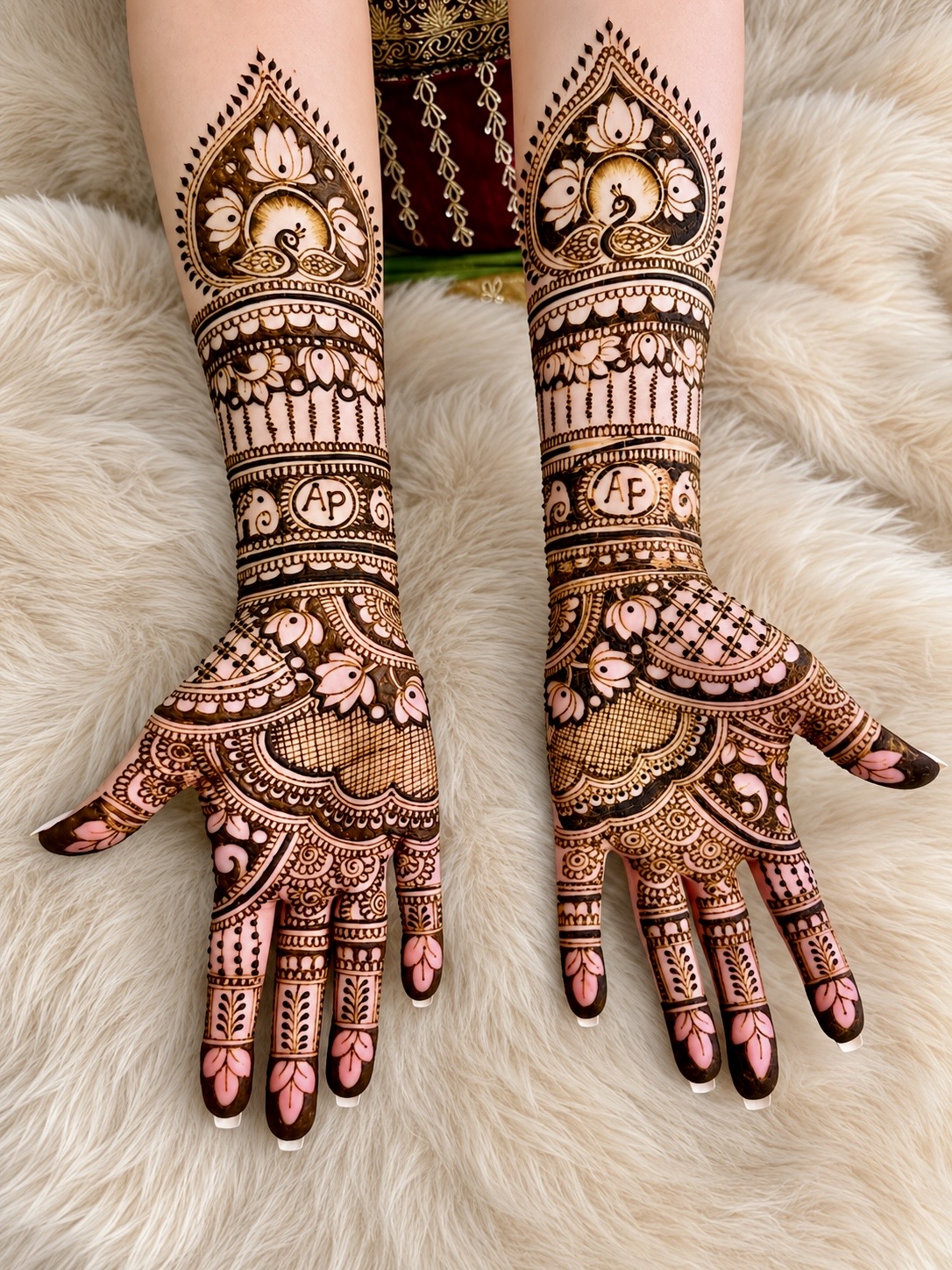
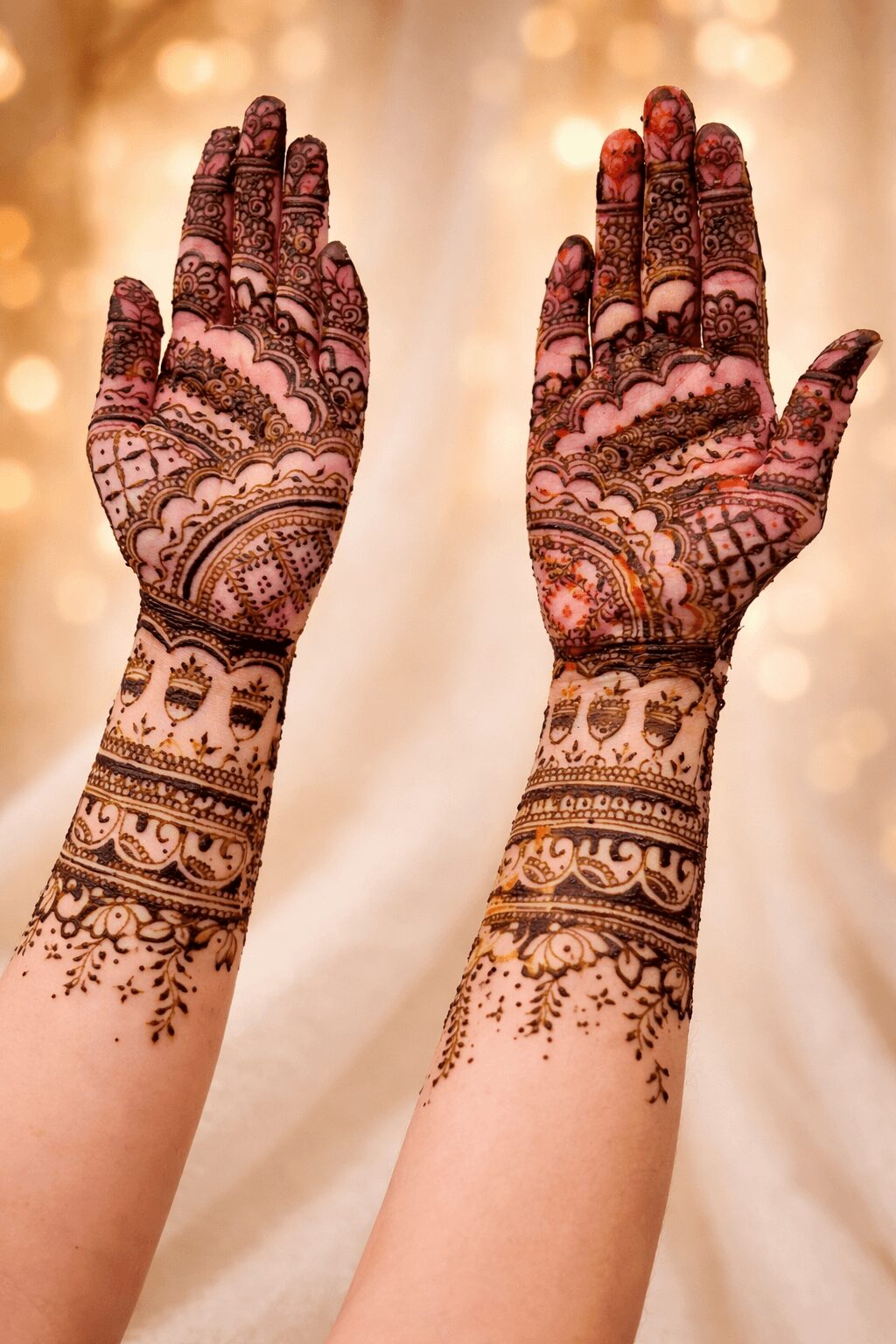
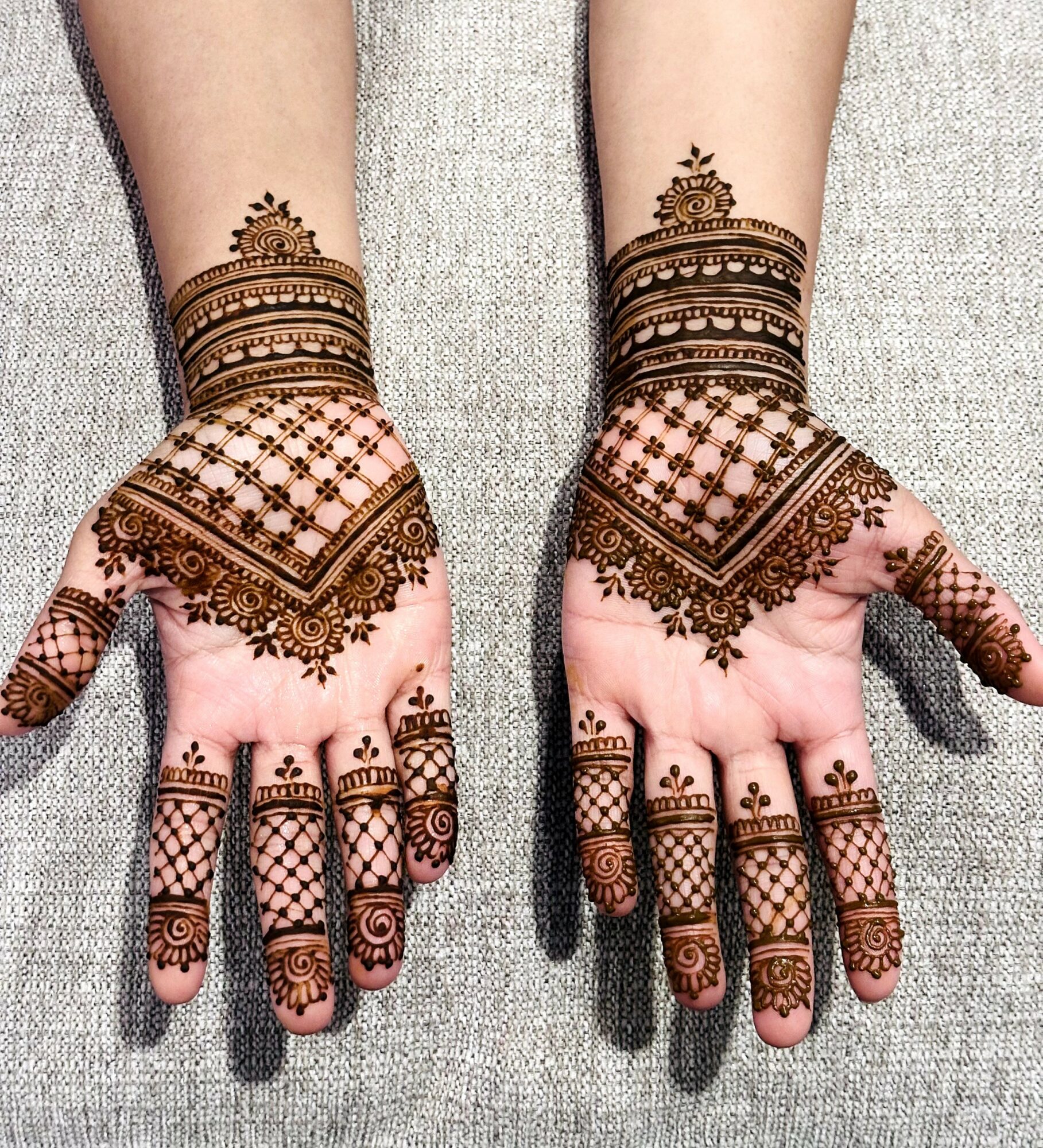
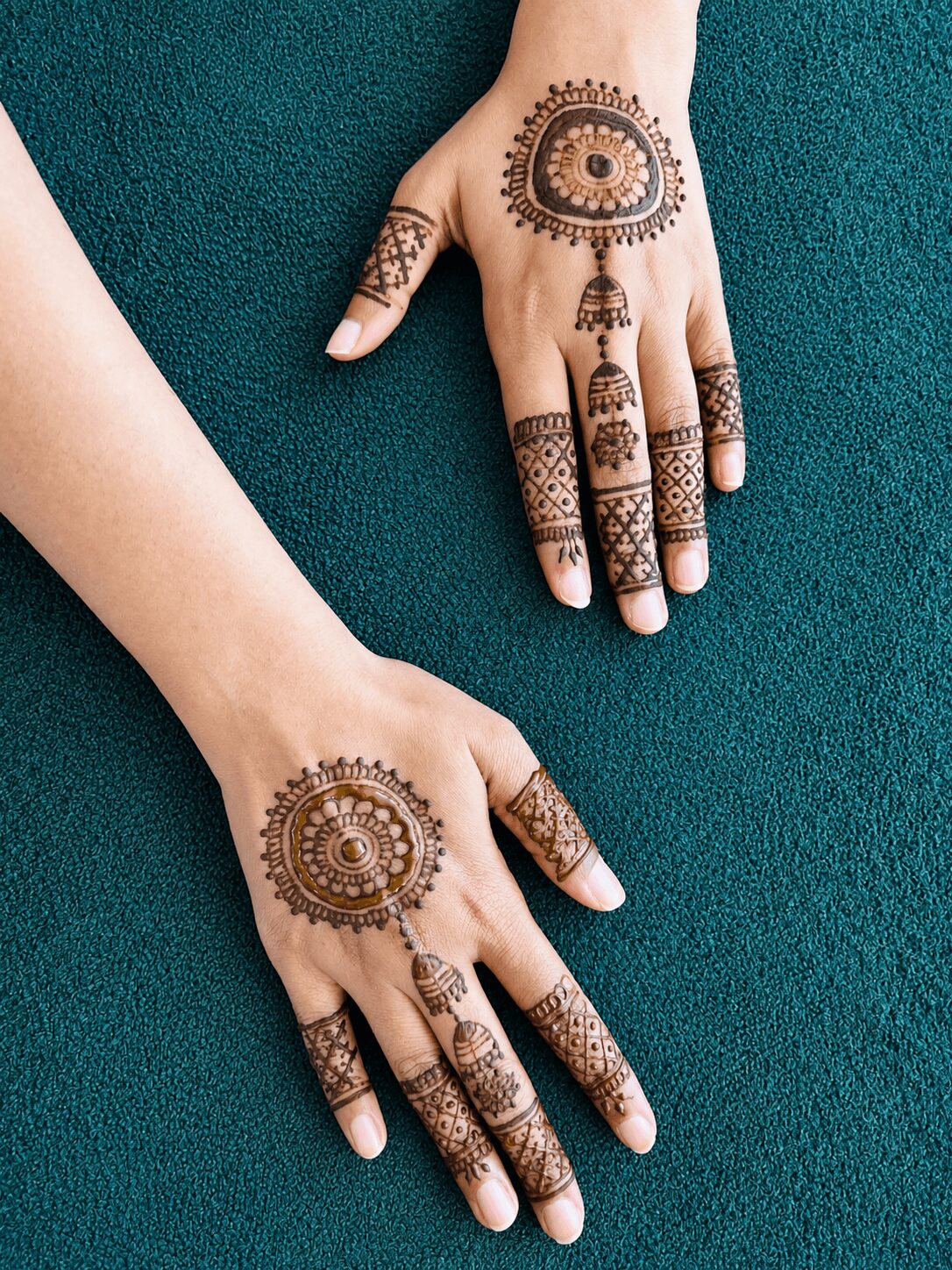
I specialize in traditional Indian Mehendi — the intricate, dense patterns that you see at South Asian weddings and celebrations — but I’ve developed a style that bridges cultural aesthetics. I work equally with clients who want a full bridal Mehendi, where both hands and feet are covered in detailed motifs of paisleys, florals, and fine lacework, and with clients who are completely new to Henna and want something smaller, modern, and personal. No two designs I create are identical. I listen first — to what the occasion means, what the person loves, what story they want to carry on their hands — and then I draw.
My background sets my work apart in ways I didn’t fully appreciate until clients started pointing it out. I trained in Bharatanatyam, an Indian classical dance, for years — a discipline entirely about the precision and intention of every movement. That translates directly into how I hold a cone. I also paint, and that painter’s eye — the instinct for composition, balance, where a line wants to lead — shapes every design. When I look at a hand before I begin, I’m thinking about it the way a painter thinks about a canvas: where is the focal point, how does the pattern flow, where does the eye travel and rest.
What I am most proud of is not any single design — it is the moment when someone who has never experienced Henna before looks at their hand when I’m done, goes quiet for a second, then smiles. That pause. That is what I work for. I’ve had clients come in curious and leave converted, booking their next appointment before they’ve even walked out the door. I’ve had American clients tell me it was the most meaningful piece of art they’d ever worn. That means everything to me.
I’m also proud of the educational thread I weave into every appointment. Most people don’t know that Henna — the plant Lawsonia inermis — has been used medicinally for centuries across India, North Africa, and the Middle East. It carries natural anti-inflammatory and antimicrobial properties. In Ayurvedic practice it has been used to cool the body, calm headaches, and strengthen nails and hair. When I explain to someone that the bride’s Mehendi isn’t just beautiful but is also a form of care — applied to keep her calm and cool on one of the most overwhelming days of her life — something shifts in how they see the art. It stops being decoration. It becomes culture. That conversation is something I bring to every stall, every event, every private appointment.
What sets me apart is simple: I don’t just do Henna. I bring its full story with me. In a city as curious and creative as Austin, that story lands. People here don’t just want a service — they want to understand what they’re experiencing. I give them both.
Networking and finding a mentor can have such a positive impact on one’s life and career. Any advice?
My biggest advice is simple — stop waiting until you feel ready and just show up.
When I started, I had no network and no mentor. What I did have was the willingness to go where my community already was. I set up stalls at South Asian cultural events, Indian festivals, and local gatherings around Austin. I wasn’t just there to book appointments — I was there to meet people and have real conversations. The bookings followed naturally.
Networking works best when you stop thinking of it as networking. Show up with genuine enthusiasm for what you do and people feel it. A fellow mom at school pickup, someone who stopped at my stall just to watch — those casual conversations built the foundation of my business.
For finding a mentor, look for people doing something adjacent to what you want to do. Shared experience matters more than shared industry. Some of my best guidance came from small business owners in completely different fields who simply understood what it feels like to build something from scratch.
And if you carry a story that feels different from everyone around you — lean into it. That difference is not a barrier. It is your edge.
Contact Info:
- Website: https://meghnas-henna-art.netlify.app/
- Instagram: https://www.instagram.com/meghnas_henna_arts/